
c. 1400 - 1789
A Living Composition
How does nature have such an innate ability to preserve itself?
In an age of mass production and fleeting trends, the traditional pomander stands as a long lasting and quiet act of resistance.
They have in physic use of pomanders, and knots of powders for drying of rheums, comforting of the heart, and provoking of sleep...
Francis Bacon, A Natural History in Ten Centuries, 1627
Cultural context
We often wonder who was the first about many things, but who was that person who decided to take a clove and press it into an orange? That moment literally changed the smell of European interiors for hundreds of years and created a portable scent talisman.
The word pomander is derived from the French pomme d'ambre, where apple of amber began as medicine. It referred to solid or compartmented balls filled with fragrant substances like ambergris, musk, civet, resin and spices.
In a world that understood disease as bad air, these balls of aromatic materials held to the nose were both prophylactic and for prayer. Cardinals carried them on golden chains and plague doctors pressed them to their faces with the infamous bird-beak masks, which were essentially wearable pomanders stuffed with herbs and spices such as lavender, cloves, and camphor. Elizabeth I received one as a New Year’s gift and kept it close.
Their scent provided protection, status, and beauty all simultaneously. They were not relying on fantasy altogether either here as evidenced based protection does come from the cloves, described even today as a powerful antioxidant. Beauty and status were also pillars behind the first pomanders.
The materials were not accessible to all, so by the sixteenth century an interpretation of the pomander was made as a domestic object using often a bitter orange and cloves.
You pressed the cloves in by hand, one by one, in careful patterns and rolled the finished pomander in a mixture of spices and orris root ... and then waited. The orange dried and shrank inside the cloves over weeks and continued over months. The smell deepens and changes. What begins as sharp citrus and fresh spice becomes something darker, more complex, more itself. A properly made pomander lasts decades. Some survive centuries.
Then, quietly, it all disappeared as synthetic everything arrived and nature did not align as much with luxury. The slow art of scent, such as the kind that required patience and attention and the willingness to make something that would outlast one fashionable season, fell away.
Molecules
Limonene (orange peel). Bright, lifting, familiar
Eugenol (clove). Warm, spicy, slightly medicinal
Irone (orris root). Powdery, violet-like, the fixative
Cinnamaldehyde (cinnamon). Warm, sweet, antimicrobial
Linalool (various). Floral bridge, rounds the composition
Myristicin (nutmeg). Dry, woody-spiced, with a faintly resinous warmth
The result is a warm, spiced composition. Warm, clove-dark, and gently radiant that settles into the room and then as a surprise, sometimes when least expected, announces its tenacious self.
In the world
The smell of power and class was prominent at this time.
When Cardinal Wolsey proceeded through the crowds of Tudor London, he held an ornate vessel of a pomander to his nose filled with ambergris, musk, and precious spices from the other side of the world. The smell announced wealth, learning, and protection from the pestilent air of the city all as one. Smell was not decorative in the fifteenth and sixteenth centuries but more a technology for self-presentation and to symbolise status. Today it's more personal, tied to self identification.
Now
We have more synthetic fragrance than at any point in human history, and less patience for the kind of slow, domestic scent-making that produced pomanders. But with a new equivalent to industrialisation ahead of us in AI, it feels the right time to revive the tradition.
Almost everything smells now of something other than its real smell. Very little of it changes over time. It is made to fade, not last.
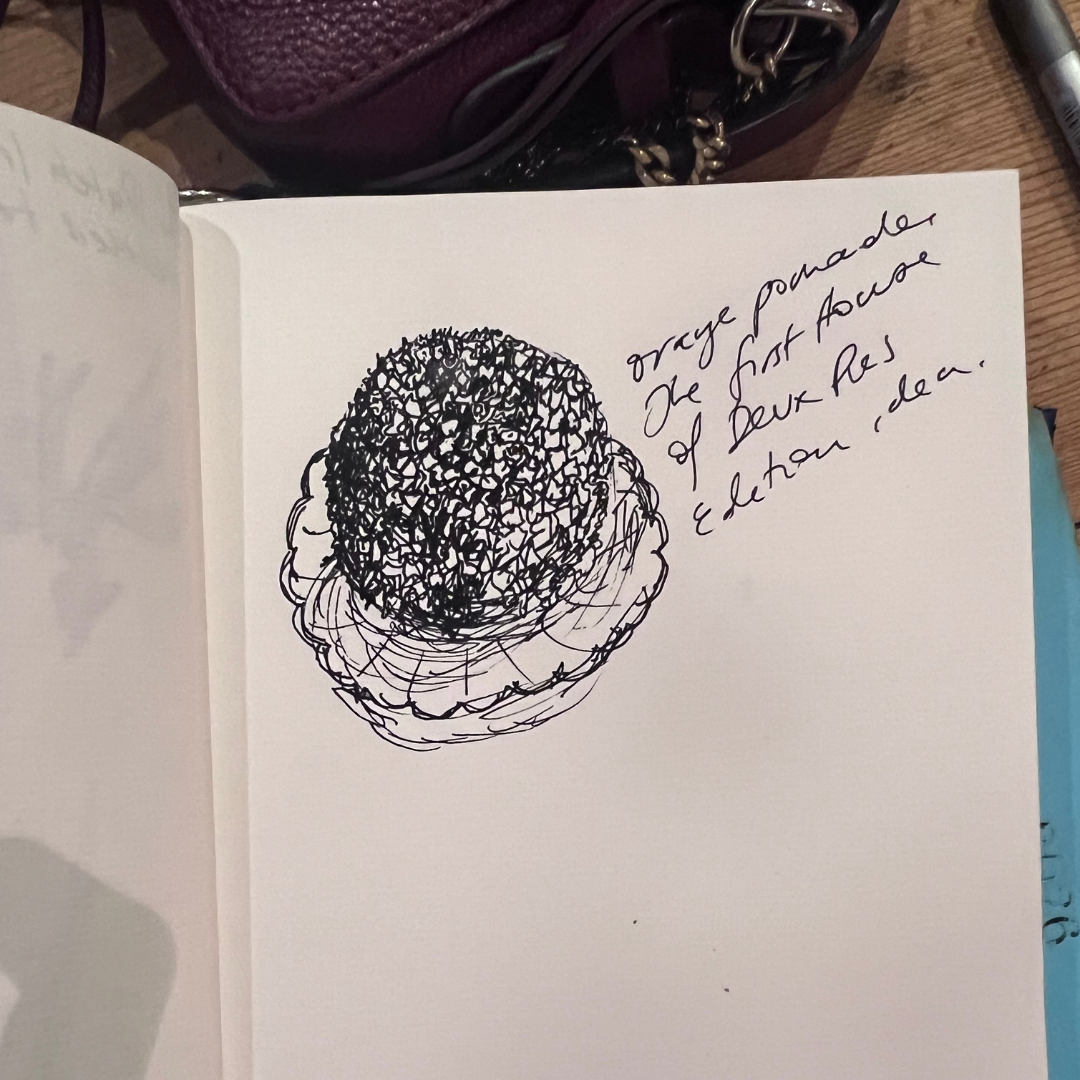
The orange pomander is the opposite of this. It is a living object that takes 4-6 weeks to craft and no longer a symbol of beauty, status and protection but a symbol of the celebration of the ordinary. Perhaps a quiet act of resistance against this dynamic fast moving world.
Its fragrance differs in week one compared to a month, or a year. It rewards the kind of attention we have largely stopped giving to things and is made today not as a talisman to demonstrate power or status, but as one for self-nurture and comfort. Perhaps to sit by your bed or on your desk, to calm and reassure.
No two pomanders are identical. The patterns in the cloves affect how scent diffuses, and each one will age differently depending on where it lives, what the air is like, and who has handled it.
Pre-orders are being taken for this first house edition.
Plant / material
Citrus aurantium, or the bitter orange, arrived in Europe from the Arab world centuries before its sweeter counterpart. The fruit was too sharp to eat, but its rind held a dense, aromatic oil that deepened as it dried.
At a time when scent was protection from illness as much as pleasure, the bitter orange became a vessel for that. Studded with cloves, it released its perfume slowly over months, its sharpness softening into something warmer, spiced, gently and persistent that also cleansed the air.
The clove, Syzygium aromaticum, came from the Maluku Islands in what is now Indonesia and was one of the most traded spices in human history, worth more than gold at certain moments on certain routes. Together with the bitter orange they create something neither could achieve alone.
The orris root, which is the dried rhizome of Iris pallida, is cultivated in the hills around Florence and acts as a fixative for this traditional pomander. It binds the volatile oils and slows their release. Orris has its own smell. A powdery, cool, slightly earthy, like violet and carrot and something ancient. It is why a well-made pomander radiates not just of orange and clove but something more complex underneath. Orris takes three years of drying before its characteristic irone develops. The Florentines have been growing it for centuries and it's one of the most expensive materials in perfumery.
Cinnamon, the inner bark of Cinnamomum verum from Sri Lanka, adds warmth. Nutmeg adds depth. The proportions are important and the quality of the materials of course also matters. But it is the patience of making each pomander that matters most.