
1910-1939
Fracturing Words and in Scent
What happens when scent and literature simultaneously break out the gates?
After the end of the First World War, soldiers returned home from across Europe, and a collective consciousness began to process the trauma through art, perfume, literature, and prose.
All sensation holds time
Marcel Proust, 1871-1922
Cultural context
The years 1921–1922 are often seen as defining moments of literary and artistic modernism in the West. In 1921, the designer Coco Chanel collaborated with the perfumer and nose Ernest Beaux to create Chanel No. 5. This was something entirely new where perfume became a composition and an art form.
In 1922 Ulysses and The Waste Land were published and Marcel Proust died, all giving it a particular resonance. During this time, F. Scott Fitzgerald was also penning The Great Gatsby.
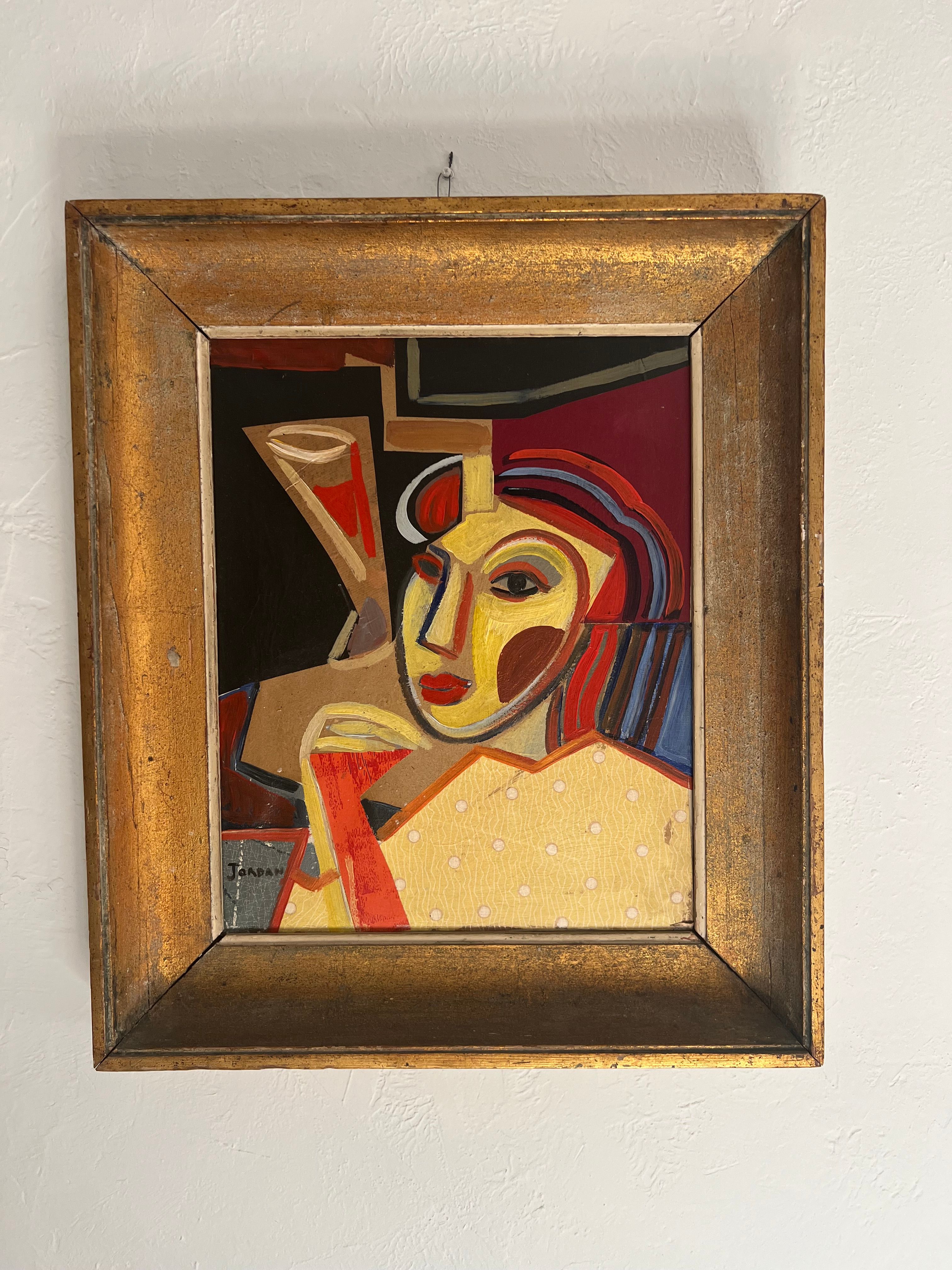
It's as if one form of understanding about the concept of time, through memory and continuity was closed, while more fragmented, external forms of expression emerged in today what we know of as the Modernist movement.
With Chanel No. 5 the result was a fragrance that rejected the single-flower perfumes that had predominated. These had been in traditional forms such as jasmine, violet or rose for example. It made way to favour another type of abstract and modern composition through synthetic molecules.
And so the post WWI period captured the spirit of a new world beginning, tentatively, to step out from the shadow of what it had endured. Perhaps this abstraction meant the world did not have to speak of the horror directly. It was a way of processing it. People seemed to be reaching for something else that was less defined and more open to interpretation as their interior and external reality had shifted so violently.
Chanel No. 5 felt like part of that shift: not simply a perfume, but a gesture toward other evolving possibilities.
Molecules
Chanel No. 5 was the beginning of the commercial scale of architecture in scent. Not built from flowers alone, but from aldehydes, alcohols, and abstractions. It was made of molecules that turned perfume from imitation into invention in line with the modernist movement. The breakthrough was a group of synthetic molecules called aldehydes, especially
C10 (decanal)
C11 (undecylenic aldehyde)
C12 (dodecanal and related forms)
In the world
A year of 'progress'
The world was becoming faster, louder, more connected. Cars were replacing horses, and by the early 1920s the Model T was everywhere, carrying people further and faster than before. Radio began to send voices into homes, while cinema gathered strangers together in darkened rooms, flickering with new ways of seeing.
Across art, film, literature, and music, something was loosening. Structure gave way to sensation, and narrative to mood. Form no longer held in the same way; instead, ideas began to surface in fragments, impressions, and atmospheres through poetry, jazz and abstraction.
Journeys that had once taken weeks were shortened and the sense of vast distance began to dissolve. As people moved between worlds more freely, between cities, languages, and identities, they carried fragments of one place into another. Manhattan, the Riviera, Paris and London were no longer separate, but part of the same drifting circuit and Coco Chanel positioned her fragrance inside that movement. Women didn’t just buy Chanel No. 5. Now they carried it across borders.
There are stories Coco Chanel gifted Chanel No.5 to soldiers to take home to their partners. It was a smell with no name, that resembled nothing that had ever grown before and the abstraction was the point. With the war the world had produced something too large to look at directly and the response was a fragrance that refused to refer to it.
The nose
Ernest Beaux
Ernest Beaux was the nose who interpreted Coco Chanel's vision. He presented her with five iterations and she chose the fifth,hence the name No. 5.
He was born in Moscow in 1881 to a French family who had been in Russia for generations. His father worked for the Russian court and he trained as a perfumer in Grasse and Moscow. By the early 1900s Beaux was working for Rallet & Co, the prestigious Moscow perfumery house that supplied the Russian Imperial court.
Beaux served in WWI on the Russian side but then the Revolution came in 1917. The Romanovs were murdered and everything he had known, the court, the empire, Rallet & Co, his whole entire world, collapsed.
He fled to Grasse around 1919-1920. At this time he was approximately 38-39 years old and he met Chanel in 1920. She commissioned the fragrance and he produced the samples. She chose No. 5 in 1921 and it was shortly after released.
Beaux did not invent the aldehyde which he included in Chanel No. 5. The molecules already existed. Chemists had synthesised them in the 1870 and other perfumers had used them sparingly and carefully, as small accents of brightness in otherwise conventional florals. François Coty had introduced traces of C-12 into L’Origan in 1905, and they appeared, quietly, within compositions such as Mitsouko.
What Beaux did was reinvent the concentration and adjusted the role of the aldehyde. He made 'cold metallic abstraction' become the dominant character rather than an accent. Where other perfumers had touched the aldehyde and stepped back, Beaux dialled it up to a volume nobody had attempted, in a quantity that overwhelmed the rose and the jasmine underneath. Exactly like modernism did with literature and art.
The question is why. Why, in those two years in Grasse between exile and the samples he presented to Chanel, did he go all the way when nobody else had?
We don't have the answer. The interviews he gave later are careful, professional, anecdotal. He spoke of his time in the Arctic and of the midnight sun. He described the clean air. He does not speak of what else he smelled in the north. He does not speak of the court he fled or the people he left behind. Perhaps the metallic dial up was to express the smell off bloodshed in the cold dark north and to bottle this secret in the same way literature was managing to cope with processing the war.
History is often an interpretation of the past to achieve a desired outcome and what we write here is not a fact but a question. What we do know is that Beaux redefined scent in the same way T.S. Elliot redefined poetry in those post war years or Ulysses redefined the novel. A new way to creatively express suffering was through abstraction.
And so perhaps the perfume speaks instead. And what it says about cold, clean, metallic, abstract, stripped of everything organic and warm and mortal - that is not the smell of the midnight sun.
Perhaps it was the smell that a man needed to help forget what the body was capable of. And he found, in the laboratory in Grasse, a molecule cold enough to do it and he created it for women.
Now
We're not in 1922. But we are in somewhat of an analogous moment where there are fragments before us to reinterpret our world.
We see violence on our doom scrolls in pixels and experience a demise of trust in institutions and their function. Despite being post-truth, much like the boats of the last line in The Great Gatsby, in this world we're constantly buffeted against the currents back to reminders of the past that we can't quite grasp but we can't quite forget.
And so we continue to reach for the comfort of scent. 6,000 new fragrances released in one year, all partially on a conveyer belt of our digital feeds, inviting us to find our own 'Madeline de Proust' moment.
Plant / material
If Chanel No. 5 were a plant, it would not be a single bloom, but something closer to the opening of cold petals at dawn. Frost edging each surface, holding the faint traces of neroli and ylang-ylang, preserving them in soft buttery wax. As if the idea of a flower had been imagined through a veil of dry ice, distant, diffused, and just beyond reach.