
In Conversation: Tanja Bochnig of April Aromatics
What does it cost to build a fragrance house entirely on materials that refuse to be rushed?
Founder and perfumer, April Aromatics
Tanja Bochnig founded April Aromatics as a natural perfume house built entirely on botanical extracts, with no synthetic reproduction. In this conversation she talks about Unter den Linden, the fragrance she built around the fleeting scent of Berlin's linden trees in bloom, and about what it costs, and what it gives back, to run an independent perfume house on nature's own schedule rather than an industry's.
The nose
Tanja Bochnig
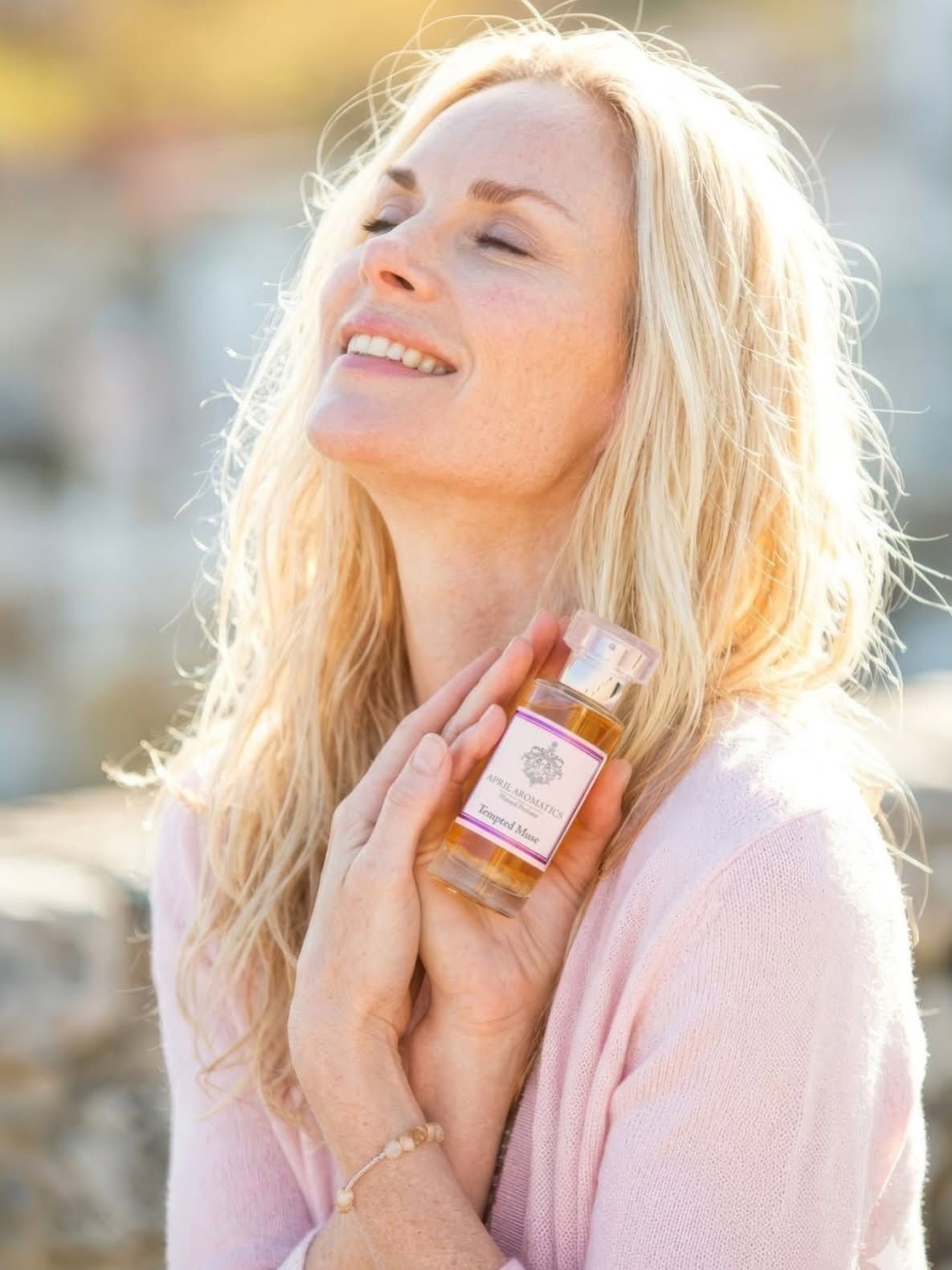
Tanja Bochnig is the founder and perfumer behind April Aromatics, a natural perfume house working only with botanical extracts, no synthetic reproduction. She trained first as an aromatherapist before turning to natural perfumery, studying under Katherine de Graaf, one of the last living students of Edmond Roudnitska.
In conversation
You trained first as an aromatherapist, whose job is to calm a nervous system, before you became a perfumer, whose job is to be interesting. Does Unter den Linden actually resolve that tension, or have you just learned to let both things be true in the same bottle without choosing?
I don't actually see those two worlds as being in conflict. In many ways, they're inseparable.
As an aromatherapist, I developed a deep respect for the healing power of nature and the profound effect that botanical scents can have on our nervous system and emotional wellbeing. When I became a natural perfumer, that philosophy didn't disappear, it simply gained another dimension.
To me, natural perfumery is where art and nature meet. It's about creating fragrances that are emotionally evocative and beautiful, while remaining true to the living character of the raw materials.
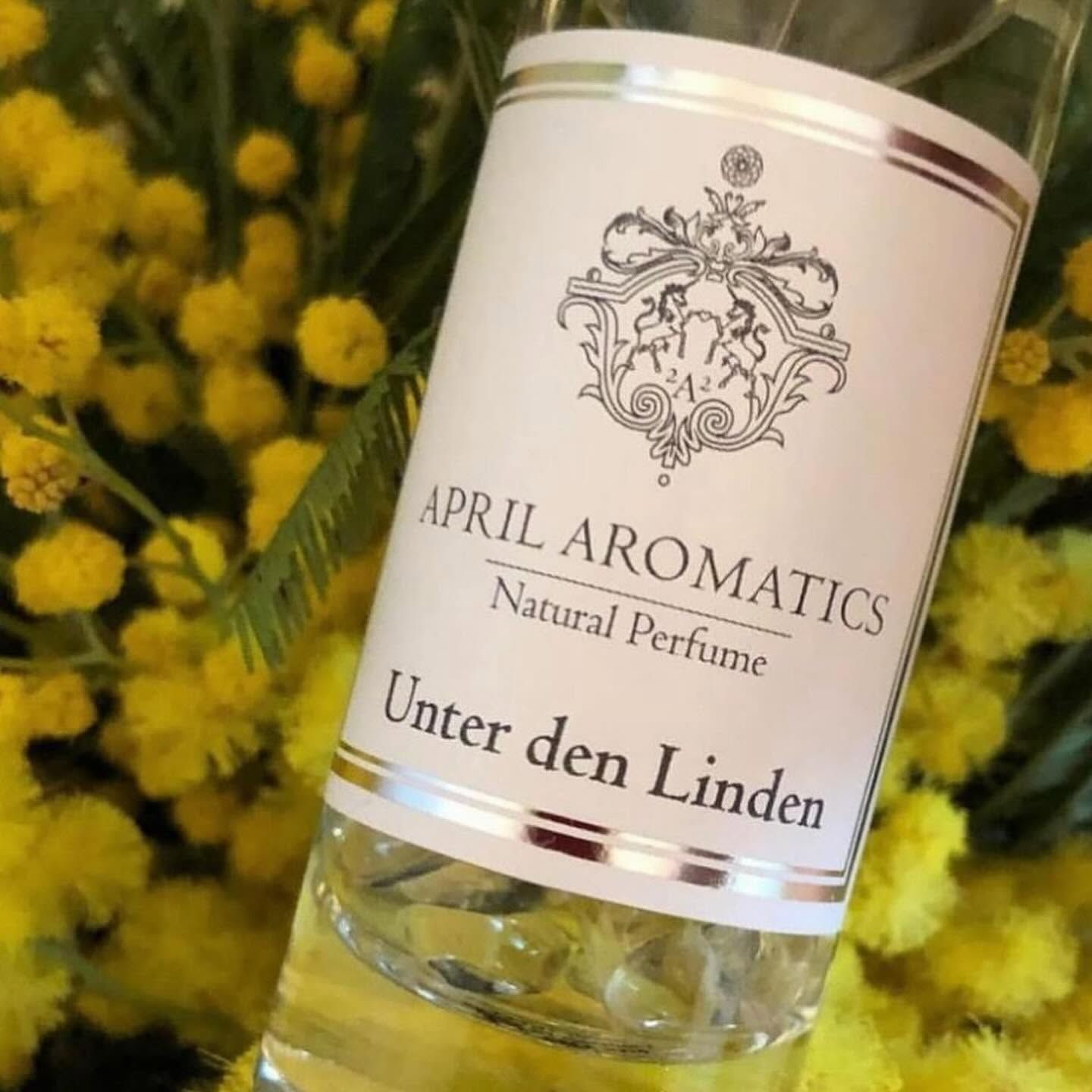
I created Unter den Linden to capture one of those fleeting moments in nature: the unforgettable scent of Berlin's linden trees when they're in full bloom for just a few precious weeks each summer. Named after the city's iconic boulevard, it's both a memory and a feeling, an invitation to return to that moment again and again.
I believe the most memorable perfumes don't just smell beautiful, they make us feel something. They connect us to nature, to memory, and ultimately, to ourselves.
We make a small number of things and try to make them honestly rather than at scale. Linden's harvest window forces something similar on you, whether you want it or not. Does that constraint ever feel like a gift, the way we'd frame it, or does it mostly just feel like a limitation you manage around?
I see it as a gift. Nature has its own rhythm, and I've learned that the most beautiful things can't be rushed or controlled.
Linden blossoms are only at their peak for a very short time each year, and that fleeting window is part of what makes them so special. Working with natural materials teaches you patience, humility, and respect. You don't dictate the process; you collaborate with it.
Of course there are practical challenges, but I'd never want to sacrifice that authenticity for convenience. I'd much rather create something that reflects the truth of nature than something that's endlessly repeatable.
In many ways, those limitations become part of the perfume's story. They remind us that the most precious things are often the most ephemeral.
If a customer only ever knows linden blossom as a tea, what do you think would surprise them most about smelling it as a perfume?
Most people are surprised because linden blossom tea and the scent of fresh linden blossoms are almost two completely different experiences.
The fragrance of the blossoms is incredibly delicate, luminous, and almost ethereal, with soft honeyed, floral, and green nuances that are difficult to capture in a single ingredient. In Unter den Linden, I've woven together several complementary natural botanicals that enhance and reveal the many facets of linden blossom, rather than trying to imitate it literally.
The result isn't the scent of a cup of tea; it's the feeling of walking through Berlin beneath blooming linden trees on a warm summer's day.
Jean-Claude Ellena has written that he never succeeded in using linden blossom, that all he could do was "fall asleep in its dark shade." You built an entire perfume around it. What do you think he was missing, or what were you willing to risk that he wasn't?
I would never presume to say that Jean-Claude Ellena was missing anything. Every perfumer experiences a material differently, and that's part of the beauty of this craft.
Linden blossom is an incredibly elusive scent. Trying to reproduce it exactly can be frustrating because its magic lies in its atmosphere as much as in its aroma.
I wasn't trying to create a perfect botanical replica. I wanted to capture the feeling of standing beneath blooming linden trees on a warm Berlin afternoon.
Perhaps the difference wasn't a willingness to take more risks, but a different intention.
Is there one specific linden tree, an actual tree, in an actual place, you were trying to get back to when you made this? Or is "the linden tree" in your work always more of an idea than a memory of one real tree?
It began with a real experience rather than one specific tree. I've experienced the scent of linden trees in bloom in both Berlin and New York, and every time it stops me in my tracks. For just a few precious weeks each summer, the air is transformed, and it's a feeling that's almost impossible to describe.
That fleeting moment became the inspiration for Unter den Linden. I wasn't trying to recreate one particular tree, I wanted to capture the emotion, the beauty, and the memory that linden blossom evokes.
Although the fragrance is named after Berlin's iconic boulevard, my hope is that everyone who wears it finds their own "Unter den Linden", a place or moment that feels just as unforgettable.
When a new fragrance starts for you, is the first spark usually a specific reference, art, music, a place, or are you chasing a smell you can't get out of your head and the meaning comes after that? Can you give some examples of fragrances?
Every fragrance begins with a story. Sometimes it's inspired by a place I've visited, sometimes by a memory or a particular moment in time. But there's almost always a botanical heart to it, a flower, a root, a fruit, or an aromatic plant that has a special meaning for me.
When you look at my collection, you'll find fragrances inspired by roses, jasmine, tuberose, lavender, citrus, incense, woods, roots, and many other facets of the botanical world. Each perfume explores a different olfactory landscape while telling its own story.
I don't separate the scent from its meaning. As I work, the fragrance and the narrative evolve together. My goal is never simply to recreate the smell of a flower or a place, but to capture the emotion, memory, and atmosphere that live within it.
You work with real botanical extracts rather than synthetic reproduction, which caps how much you can ever make. Would scaling up mean compromising the botanicals? Is this frustrating and how do you work around it?
Working with real botanicals naturally sets limits, but I've never seen that as a disadvantage. Nature has its own rhythms, and I believe they deserve to be respected rather than overcome.
Of course, scaling up would bring challenges. Some raw materials are only available in small quantities, harvests vary from year to year, and exceptional botanical extracts are often not only scarce but also increasingly expensive as demand grows. Unlike synthetic materials, you can't simply produce more of them at a lower cost.
For me, compromising the integrity of a fragrance by replacing exceptional natural materials with easier or cheaper alternatives has never been an option. I've always envisioned April Aromatics as an artisan house rather than a mass-market brand. Growth is welcome, but only if it allows me to stay true to the quality, craftsmanship, and botanical richness that define my work.
In the end, I don't see these natural limitations as obstacles, they're part of what makes each perfume authentic and alive.
Do you wear your own fragrances day to day, or do perfumers tend to go unscented themselves? What do you reach for in terms of fragrance yourself?
People are often surprised to hear that I don't wear perfume every day. When I'm creating, I need to keep my sense of smell as clear and sensitive as possible.
I'm surrounded by scent all the time, not just in the studio, but in everyday life. Laundry detergent, dishwashing liquid, shampoo, soap, our senses are constantly processing fragrances, and it can easily become sensory overload. Giving my nose a break helps me stay receptive and focused.
I do wear my own fragrances, especially when I'm evaluating them throughout the day, often applying them to different parts of my arms to observe how they evolve. But when I wear a perfume simply for myself, I tend to choose my lightest compositions, soft roses or delicate citrus fragrances. They feel effortless and never overwhelm me.
For me, preserving my sense of smell is just as important as using it. It's one of the most valuable tools I have as a perfumer.
Is there another perfumer, living or dead, whose work you think about more than you'd probably admit publicly?
When I began studying natural perfumery, there were virtually no formal courses. It wasn't the field it is today. People would often ask, "Natural perfumery? What is that?" In many ways, I had to find my own path.
One of the greatest gifts I received was studying with Katherine de Graaf, who was one of the last living students of Edmond Roudnitska. Through her, I was introduced not only to techniques, but to a way of thinking about perfume, its structure, balance, and artistic integrity. Those teachings have stayed with me throughout my career. Today, very few people may know Katherine de Graaf, but she was one of the most influential people in my development as a perfumer. I feel deeply fortunate to have learned from someone who carried forward Edmond Roudnitska's philosophy and shared it with such generosity.
From there, I largely developed my own voice through years of experimentation and working closely with natural materials. Today, aspiring natural perfumers have access to wonderful books, courses, communities, and suppliers. I'm genuinely happy to see the field flourish, although I sometimes wish those resources had existed when I was starting out.
Looking back, perhaps that lack of a defined path also became a gift. It encouraged me to listen more closely to nature, trust my own instincts, and develop a style that feels authentically my own.
What are your biggest challenges as a natural perfumer?
One of the biggest challenges is working with nature itself. Every harvest is different. Climate, soil, and weather all influence the quality and character of botanical extracts, so you have to embrace a certain unpredictability and adapt constantly.
Another challenge is that natural perfumery offers a much smaller palette than conventional perfumery. That limitation can be demanding, but I also find it incredibly inspiring. It encourages creativity and a deeper understanding of each material.
There are also practical challenges. High-quality natural ingredients are precious and expensive, and regulations continue to evolve, requiring ongoing reformulation and careful sourcing.
Despite all of that, I wouldn't choose another path. Those challenges are also what make natural perfumery so rewarding. Every fragrance becomes a collaboration with nature rather than an attempt to control it.
What are you most proud of?
"Proud" isn't actually a word I use very often. I feel much more gratitude than pride.
If there's one thing I'm grateful for, it's that I've been able to stay true to my vision. When I began, natural perfumery was still a niche that many people didn't understand. There was no clear path, very little education, and many reasons to take the easier route. But I never wanted to compromise on working with beautiful botanical materials.
What brings me the greatest joy is knowing that April Aromatics has touched people around the world and that my fragrances have become part of their memories and meaningful moments.
And if there is something I'm quietly proud of, it's that after all these years, I'm still curious. I still get excited by the scent of a flower I've smelled hundreds of times. Nature continues to surprise and inspire me, and that sense of wonder has never disappeared. I hope it never does.
What does a week in your life look like these days, now you are established?
No two days are ever the same, which is one of the things I love most about running an independent perfume house.
One day I might be in the office answering emails, preparing invoices, organizing exports, completing customs paperwork, or taking care of the many administrative tasks that come with running a business. Another day I'm in the studio, blending fragrances, bottling perfumes, packing orders, and taking parcels to the post office.
There's also time spent sourcing exceptional raw materials, developing new ideas, photographing products, writing, or simply smelling and evaluating materials. Inspiration often comes when I'm out in nature, travelling, or visiting botanical gardens, so I try to leave space for those moments as well.
Being established hasn't meant doing less, it has meant wearing many hats. But I enjoy being closely involved in every stage of the process because it allows me to ensure that every bottle leaving the studio reflects the care and craftsmanship that April Aromatics stands for.
What gives you a natural high?
Nature, without question.
Being near the ocean, walking through a forest after the rain, discovering a plant in bloom, or catching the scent of linden trees on a warm summer day, those moments instantly lift my spirit. I also love travelling and experiencing the unique scents of different landscapes and cultures. Every place has its own olfactory signature, and I find that endlessly inspiring.
I also experience a natural high when I'm creating. There are rare moments in the studio when a fragrance suddenly comes alive and everything falls into place. It's impossible to plan, but when it happens, it's pure joy.
And perhaps the greatest gift of all is that after all these years, I still feel a sense of wonder. Nature never stops surprising me.
How have you seen perfumery change since you started, and do you feel the pressure to change with it? For example, 6,000 new brands were released last year. Do you feel pressure to do all the shows and events?
I honestly don't pay much attention to how many new brands are launched each year. My focus has always been on creating meaningful fragrances rather than following trends or watching the market too closely.
What has changed in a wonderful way is that natural perfumery has become much more visible and appreciated. When I started, it was a very small niche. Today there's a vibrant community of natural perfumers, and I think that's something to celebrate.
Earlier in my career, I travelled extensively for exhibitions and perfume events. These days, I'm much more selective. Not because I don't enjoy meeting people, but because travelling constantly is exhausting, and my sense of smell is extremely sensitive. After spending hours in environments filled with hundreds of fragrances, I simply need time and space to recover.
I don't feel pressure to be everywhere. I'd rather invest my energy in creating beautiful perfumes than trying to keep up with everything that's happening around me. Staying true to my own rhythm has always been more important than following the industry's pace.