Le Rouret, Provence - Late October 2025
The Healing Garrigue
What can a single meadow teach you about medicine, memory, and scent?
We walk in a late October morning above an old Roman camp in Provence and discover what the companion plants Calamintha nepeta, Aleppo pine and Inula viscosa all say about healing.
Pinching and sniffing is a special way of learning about our connection with nature.
House of DeuxPies
Cultural context
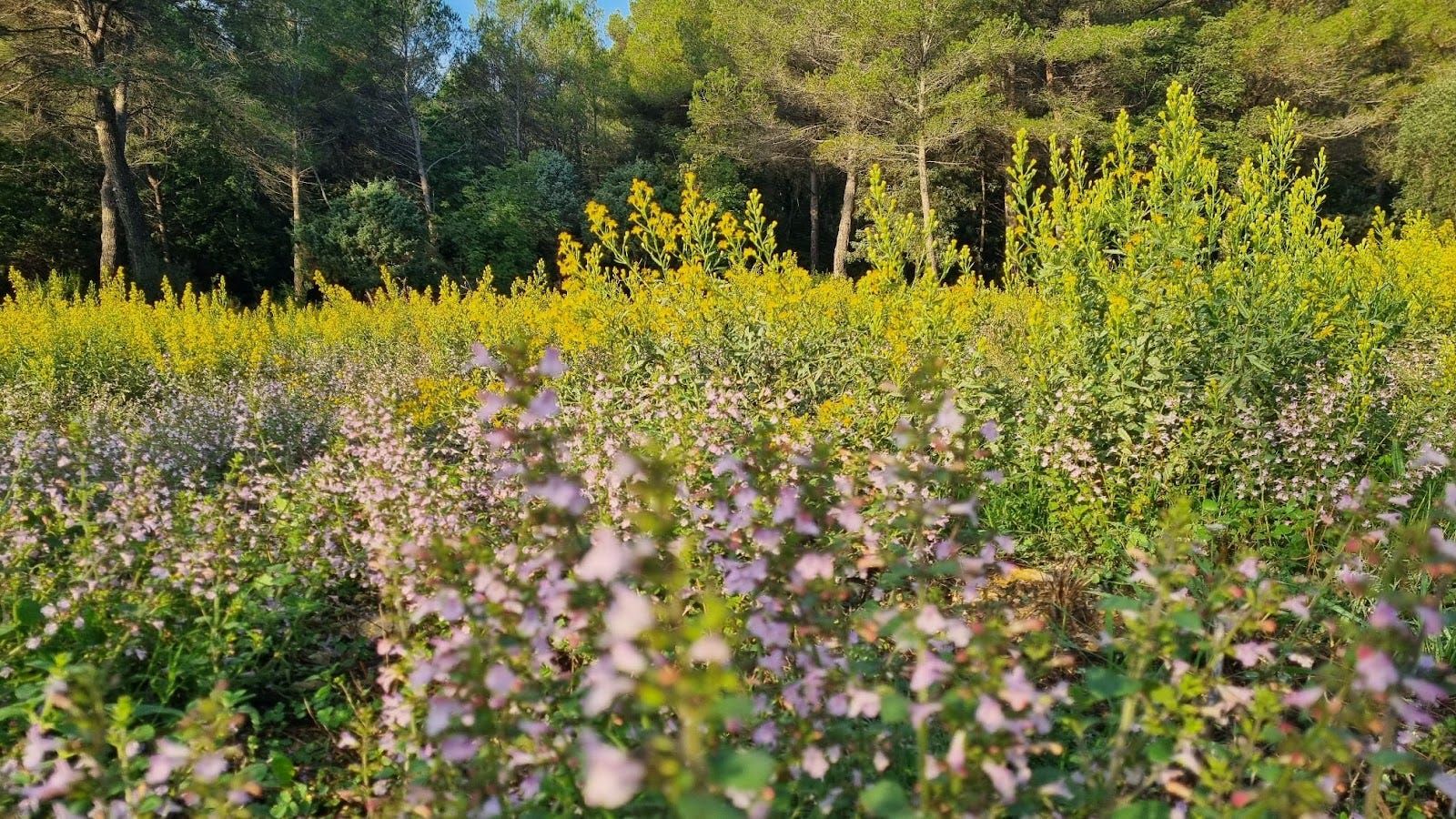
Half way up an old Provence roman camp in a late October we discover a nearby carpet of purple and yellow flowers, overlooked by a loft of pine trees.
The anticipatory morning air high above the village as it wakes carries the scent of the previous night's dampness. In Provence, they call it garrigue. It's a term for the low-lying shrubland that defines this region.
If we could capture it in a bottle, you would experience a fragrance that is both layered with earth and air. There's the faint spice of wild lavender and thyme, the minty freshness of undergrowth, the morning petrichor rising from terracotta soil and limestone, and the resinous dust of pines mingling with the salty breath of the sea with some mustiness from the acorn forest.
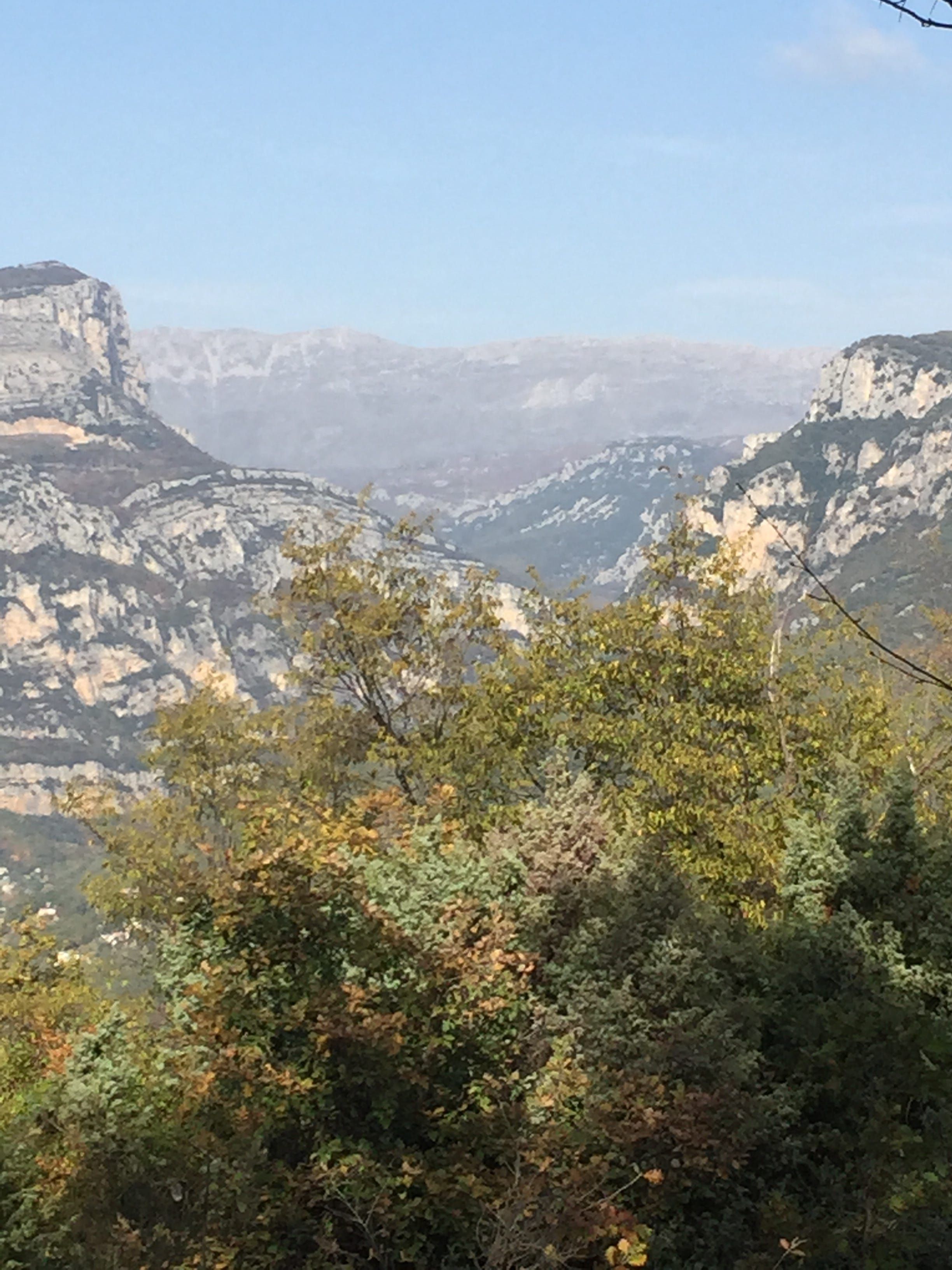
Often, we can find seashell imprints etched into the rocks, a reminder that this entire landscape was once submerged beneath the sea, long before it became a Roman settlement. This meadow rests on an ancient Mediterranean seabed, lifted skyward by the shifting plates of Europe and Africa, a testament to the ever-changing world from which we are born.
Plant / material
In this meadow’s foreground we have Calamintha nepeta or Lesser Calamint. An aromatic and medicinal plant with a light mauve flower from the mint family also grows abundantly on the side of chalky footpaths and against rock walls. It flowers until November and its leaves are provide a dominant spicy basilic and mint like scent. Used in traditional medicine, its infusion of its leaves is used to treat gastrointestinal diseases and improve digestion.
Behind the Lesser Calamint is the yellow flower of Inula vicosa (Dittrichia viscosa or False Yellowhead), which is also traditionally used in Mediterranean folk medicine, primarily for its anti-inflammatory, antimicrobial, and antiseptic properties. It is used in teas for treating respiratory issues like coughs and colds but also as a wash for wounds and infections or as a poultice for joint pain. It sits as a sea of small dandelion-like flowers, and has a distinctive resinous fragrance that is somewhat medicinal, with a hint of bitterness, and eucalyptus-like with herbal or earthy undertones. This plant’s oils and sticky resin compound into a memorable soapish scent, especially when crushed or bruised.
This brings us to the magical guardian presence of the Mediterranean pines in the distance where they stand guarding this vibrant aromatic meadow. They contain free radicals for the body often packaged into nutraceuticals because bark extract is particularly rich in plant compounds called polyphenols, which are likely responsible for its health-promoting benefits. The resin also has purported medicinal qualities.
The headlines are loud. A shifting global order, debates about artificial intelligence, anxiety about what changes and what does not. Camp Romain sits above it all, a hillside that has absorbed many greater turns of history. Tuning into the micro seasons here and we begin to understand that changes may bring change, but nothing really changes.
So there captured in one alpine field is the calming convergence of aromas and medicinal compounds sitting together naturally as companion plants to provide a holistic landscape of healing. The way these plants grow together gives us a signifier of how we could play with them.
“We stand here together” the plants seem to say. “please use us together”.